

When it comes to breaking down material in mining and aggregate operations, two machines come to mind: the traditional crusher (like jaw or cone crushers) and the feeder breaker. While both reduce material size, they’re built for different roles — and knowing which fits your application can make the difference between costly delays and steady production.
Here’s what you need to know.
How Does a Traditional Crusher Work?
A typical crusher — such as a jaw, cone, or impact crusher — uses compressive force to break down large material into smaller pieces. They’re common in:
- Primary or secondary crushing circuits
- Hard rock mining
- Aggregate quarries
Benefits:
- Handles harder, more abrasive rock
- Produces more uniform cubical product for final use
- Good for high PSI rock and stone
Drawbacks:
- Typically stationary; requires feeders and screens to control flow
- Can create bottlenecks if large lumps clog the chamber
- High impact means more wear on liners and parts
- More complex maintenance and parts replacement
How Does a Feeder Breaker Work?
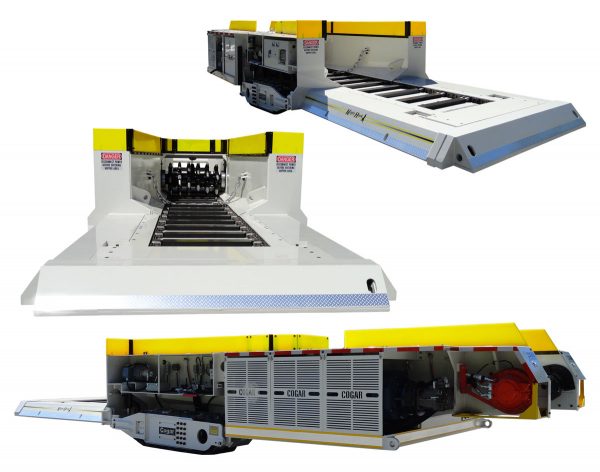
A feeder breaker combines material transport and size reduction in one rugged machine. Material is fed onto a chain conveyor, which moves it toward a rotating breaker drum or pick roll. The breaker fractures the material into more manageable pieces for belts or further processing.
Feeder breakers shine in:
- Underground mining
- Reclaim tunnels under stockpiles
- Coal prep plants and soft rock operations
Benefits:
- All-in-one feeder and crusher: fewer machines, simpler flow
- Handles softer, friable material like coal, salt, potash
- Moves material continuously to downstream belts
- Reduces jams and bottlenecks
- Easier access for maintenance, fewer wear parts
- Can be crawler-mounted for mobility underground
Drawbacks:
- Typically used for softer, layered materials
- Not ideal for high PSI hard rock

Which One Boosts Efficiency and Uptime?
If you’re moving soft to medium-hard material like coal, salt, or potash, a feeder breaker can deliver better:
- Throughput in confined or low-clearance spaces
- Downtime prevention by handling large lumps without clogging
- Maintenance efficiency with fewer moving parts
If you’re processing hard rock aggregates or producing final product for construction specs, a traditional crusher is still the right choice — but often paired with feeders, screens, and conveyors to control flow and gradation.
What Makes a Cogar Feeder Breaker Different?
At Cogar, we design feeder breakers for real-world mining challenges:
- Heavy-duty chain and flight systems
- Powerful pick rolls with hardened teeth
- Low-profile, crawler-mounted units for underground cuts
- Wet breaker options for sticky, moisture-heavy coal
- Full rebuild and parts support — even after hours
Final Takeaway
Choosing the right size-reduction equipment comes down to your material type, production goals, and site conditions.
For softer, high-volume feed — the feeder breaker is king for reliability and reduced downtime.
For hard rock final-product sizing — traditional crushers do the job with higher PSI performance.
Want to see if a feeder breaker is right for your operation?
Contact Cogar Manufacturing for expert advice or a custom quote today.